
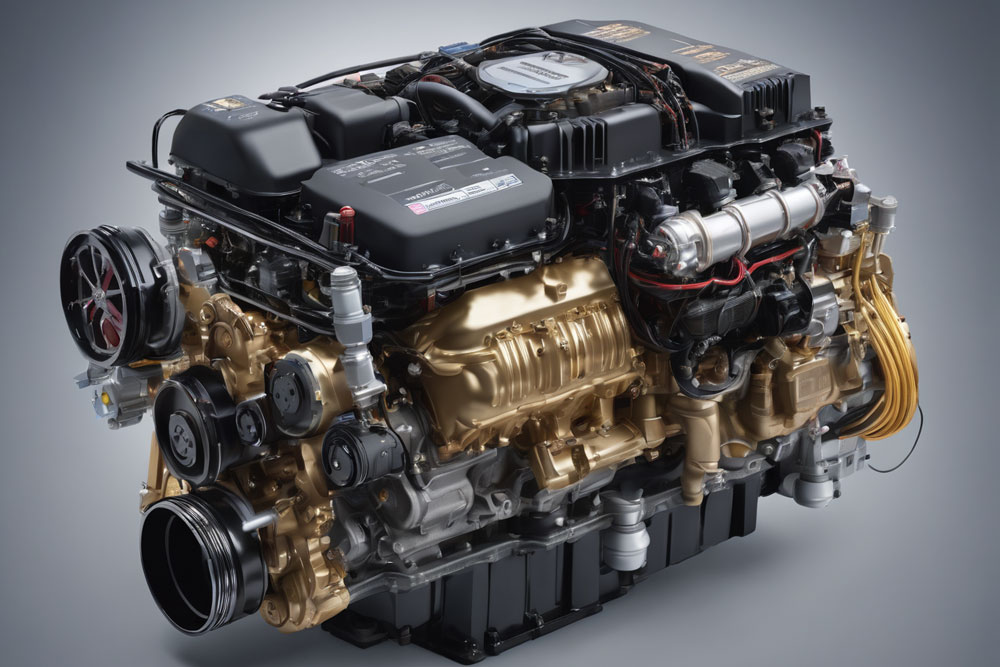
Camshafts in Engine Dynamics: Mastering Performance
The key to a high-performance engine is its efficient management of air and fuel, which is then converted into power. Camshafts stand out as silent architects, dictating the engine’s performance characteristics amongst the various components that play a crucial role in this process. In this blog post, ECU Flash delves into the fascinating world of camshafts, exploring their function, types, and impact on overall engine performance.
Understanding the Basics:
At its core, a camshaft is a rotating shaft with protruding cams or lobes that actuate the opening and closing of engine valves. This mechanism is essential in precisely synchronising the intake and exhaust valves, enabling the engine to breathe with utmost efficiency. The camshaft’s design and profile significantly influence the engine’s power delivery, torque curve, and responsiveness.
Camshaft in Engine Performance: The impact
- Valve Timing:
-
- Camshafts dictate when the intake and exhaust valves open and close, influencing the engine’s power band.
- Advancing or retarding cam timing can optimise performance for specific applications, such as low-end torque or high-end horsepower.
- Duration and Lift:
-
- Duration refers to the valve opening time, affecting the engine’s overall efficiency.
- Lift determines how far the valve opens, influencing the volume of air and fuel the engine can ingest.
- Overlap:
-
- The overlap period is a critical phase in the engine cycle where the intake and exhaust valves remain open to scavenge residual gases and optimise cylinder filling with utmost efficiency.
Types of Camshafts:
- Flat Tappet Camshafts:
-
- These traditional camshafts feature flat-faced lifters and are commonly found in older engines.
- Flat tappet cams are known for their simplicity but may limit high-end performance compared to more advanced designs.
- Roller Camshafts:
-
- Roller camshafts utilise roller-tipped lifters, reducing friction and wear.
- This design allows for more aggressive cam profiles, improving performance across the RPM range.
- Hydraulic vs. Solid Lifters:
-
- Hydraulic lifters use oil pressure to adjust the valve lash automatically, providing a smoother operation.
- Solid lifters require manual adjustment and are often favoured for high-performance applications due to their precise control over valve events.
Advanced Camshaft Technologies:
- Variable Valve Timing (VVT):
-
- VVT systems adjust the timing of the camshaft, optimising performance at different engine speeds.
- This technology enhances fuel efficiency, idle quality, and overall power delivery.
- Camshaft Phasing:
-
- Camshaft phasing systems dynamically alter the relationship between the crankshaft and camshaft, adapting to driving conditions.
- Improved phasing can enhance low-end torque without sacrificing high-end power.
- Performance Camshafts:
-
- Aftermarket performance camshafts offer enthusiasts the ability to fine-tune their engine’s characteristics.
- Aggressive profiles can maximise horsepower for track applications, while milder profiles cater to street-driven performance.
The Last Word
In the intricate dance of engine components, the camshaft emerges as a choreographer, orchestrating the precise movements that result in optimal combustion and power generation. As automotive enthusiasts and engineers continue to push the boundaries of performance, camshaft technology evolves, offering new possibilities for achieving unparalleled power and efficiency. Whether you’re a gearhead fine-tuning your classic ride or an engineer pushing the limits of modern performance, understanding the nuances of camshafts is critical to unlocking the true potential of any high-performance engine.
