
Low AdBlue fluid
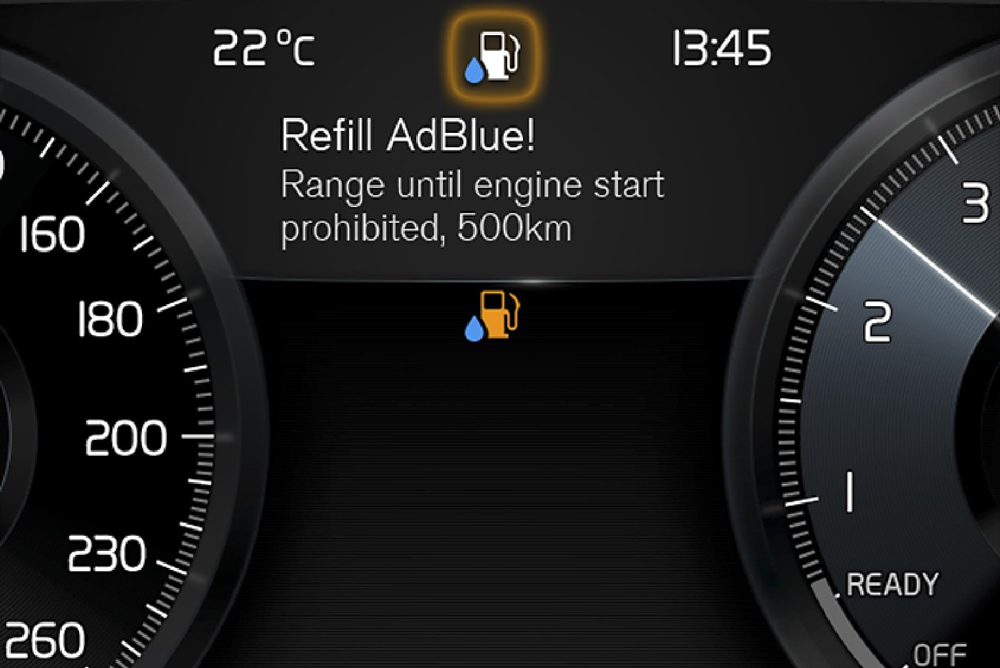
A refill message can be a genuine low-fluid alert, but a level-sensor fault can create a similar warning. Use the correct fluid and avoid assuming a refill has cleared the underlying issue.

An AdBlue warning can be a simple refill prompt or the first sign of an SCR system fault. This guide explains what the light can mean, when a countdown matters, and how to avoid guessing at parts.
For diesel cars, vans and commercial vehicles with AdBlue / SCR systems. Exact warnings, safety guidance and available work always depend on the vehicle and ECU.
AdBlue is used by the SCR system to reduce exhaust emissions. A dashboard message does not automatically mean one component has failed: it is the ECU telling you that fluid level, dosing, sensor readings or SCR efficiency need attention.
Start by reading the full message, not just the symbol. A refill request, emissions warning, reduced-power notice and restart countdown need different next steps. The meaning varies by vehicle, so the exact dashboard message and stored fault data should be confirmed before parts or programming are recommended.
The warning is a symptom, not a parts list. These are common causes we look to confirm with diagnostic information.
A refill message can be a genuine low-fluid alert, but a level-sensor fault can create a similar warning. Use the correct fluid and avoid assuming a refill has cleared the underlying issue.
The SCR system relies on sensor readings before and after the catalyst. An implausible reading can trigger an emissions warning even when the tank is not empty.
Pressure, dosing, heater and crystallisation problems can stop the system dosing correctly. Wiring and connectors need checking too — replacing parts on guesswork is expensive.
A catalyst-efficiency code may be caused by the catalyst itself, poor dosing, a sensor issue or exhaust leaks. The fault code alone does not identify the failed part.
Escalation logic varies by vehicle. Treat the dashboard message and current drivability as the most reliable guide, rather than a generic distance or percentage.
Stage 1 · Check soon
An AdBlue, emissions or engine-management message is present, but the vehicle may still drive normally. The exact display and escalation strategy varies by manufacturer and ECU.
Practical next steps
Stage 2 · Do not delay
The system may limit torque, power or speed to encourage repair. Continuing to drive can make a simple fault harder to resolve and may leave a loaded commercial vehicle unable to complete its work.
Practical next steps
Stage 3 · Get help now
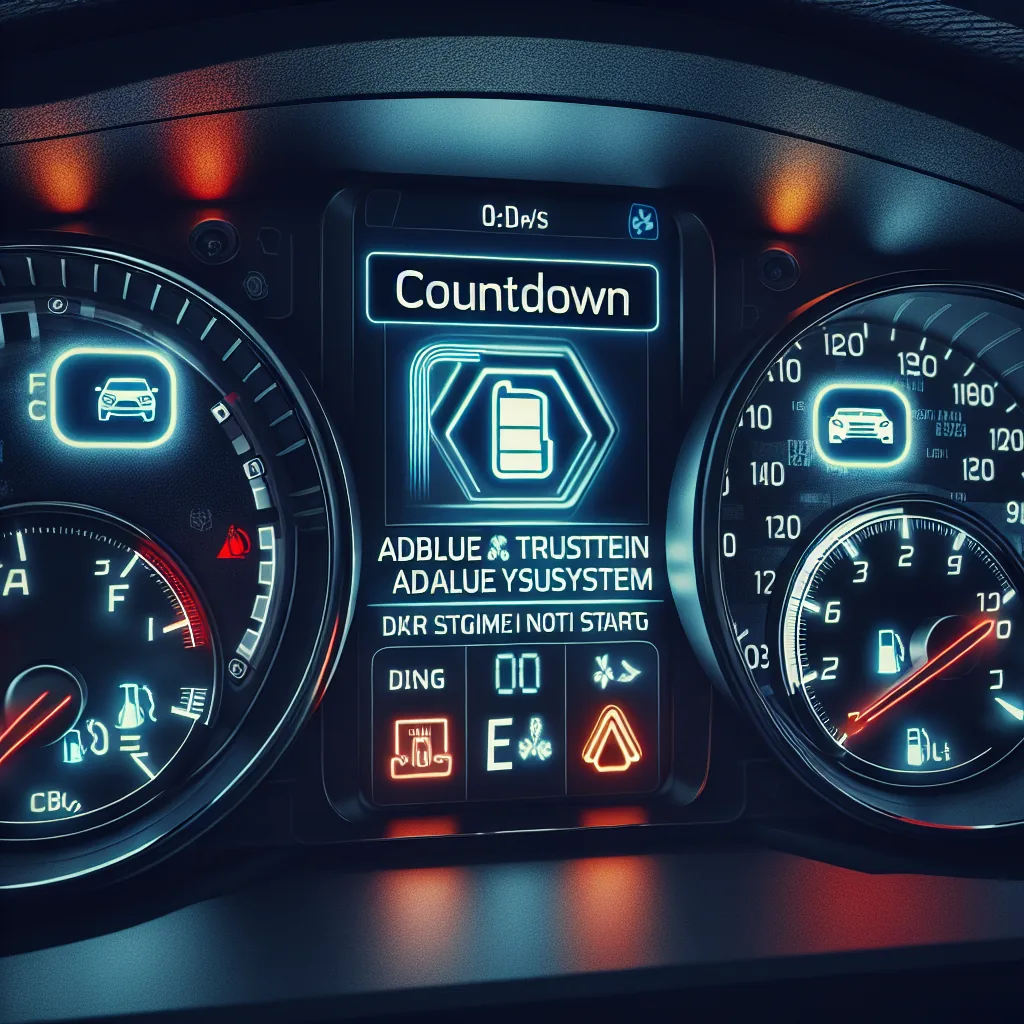
Some systems show a limited number of miles, starts or a time period before an engine restart is prevented. Do not rely on a generic range: the displayed countdown and vehicle condition are what matter.
Practical next steps
We begin with the vehicle’s reported message and manufacturer-specific fault codes, then review live SCR and NOx data, relevant dosing or pressure readings, and the ECU/application where access allows. This helps separate a real low-fluid issue from a component, wiring or efficiency fault.
The appropriate route follows diagnosis; it is not decided from a warning light alone.
Repair addresses the confirmed physical cause: for example a pump, injector, sensor, heater, wiring issue or catalyst-related fault.
Explore repairSome vehicle-specific ECU work may be considered after fault-code review, compatibility checks and an assessment of the vehicle’s application.
Check remote optionsEmissions-system disabling is not a standard solution for ordinary public-road vehicles. Suitability, use and legal requirements must be assessed individually.
Read the guidanceIt can mean the fluid level is low, but it can also indicate an SCR fault involving NOx sensors, the pump, dosing injector, heater, wiring or catalyst efficiency. The exact dashboard message and a diagnostic scan are needed to tell the difference.
That depends on the vehicle’s warning stage, the message shown and whether it has reduced power or a restart countdown. A warning can progress, so use the manufacturer’s safety guidance and arrange diagnosis rather than relying on a generic mileage estimate.
It may clear a genuine low-level warning after the vehicle has recognised the refill, but it will not repair a sensor, pump, injector, wiring or SCR fault. Adding more fluid to a faulting system can delay the correct diagnosis.
Treat it as urgent. Photograph the message, record the displayed miles or starts, and provide the registration, vehicle details and fault codes if available. Do not assume the countdown will reset after a refill or a code clear.
We review manufacturer-specific fault codes alongside live SCR and NOx data, system pressure or dosing behaviour where available, and the vehicle’s exact ECU/application. This helps identify the cause before parts or programming are recommended.
Both depend on the vehicle, fault, required access and whether repair, programming or a different route is appropriate. Send the registration, dashboard message, fault codes and photos where possible so ECUFLASH can assess the likely scope first.
Share your registration, dashboard message, fault codes and any warning-light photos. We will assess the likely diagnostic route and whether a suitable service is available for your vehicle.